
 Written by
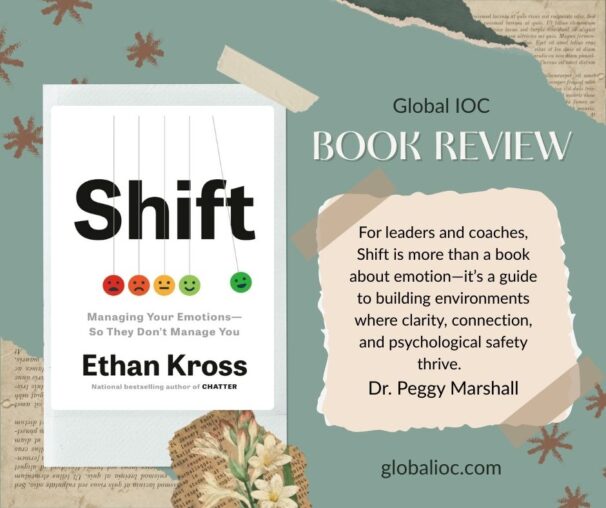
 Ethan Kross, a neuroscientist at the University of Michigan and author of the bestselling Chatter, has spent years studying the inner voice that drives our emotions. In his new book, Shift: Managing Your Emotions—So They Don’t Manage You, he takes on an even bigger challenge: what to do with the powerful, often disruptive emotions that shape our thoughts, relationships, and decisions.
Emotions as Data, Not Disruptions
At the heart of Kross’s message is a reframe. Emotions aren’t problems to suppress, nor are they simply waves to ride out passively. They are signals—sources of information about what matters, what feels threatened, and what deserves attention. Instead of seeing emotions as “good” or “bad,” Kross invites us to treat them as pieces of data. The real skill, he argues, is learning how to shift our relationship with them before they spiral into patterns of rumination, conflict, or avoidance.
This shift begins in the body. Kross reminds us that emotions surge faster than conscious thought. Our amygdala and stress response light up in milliseconds, sending signals to tense muscles, quicken breath, and narrow focus. In those moments, we are primed for fight-or-flight rather than reflection or choice. His work highlights a truth many leaders and teams recognize daily: we often react before we realize what’s happening.
The Toolkit of “Shifters”
The most practical contribution of Shift is what Kross calls “shifters”—strategies to redirect the trajectory of emotion. These tools don’t deny the feeling; they interrupt its momentum and open space for a wiser response.
- Sensory Shifters: Engaging the senses—through music, movement, scent, or even taste—can calm the nervous system and change our state almost instantly. For example, stepping outside for a few breaths of fresh air can signal safety to the body in ways words alone cannot.
- Attention Shifters: Where we place attention determines whether emotion intensifies or softens. Kross suggests deliberately redirecting focus, sometimes through simple tasks, to loosen the grip of a strong emotion.
- Perspective Shifters: Stepping back to reframe the story, ask how we’ll see the moment in a week or a year, or view the situation from another’s perspective helps us recognize that feelings are not the whole truth.
- Environmental and Social Shifters: Our surroundings and relationships profoundly shape emotion. A cluttered space, a tense colleague, or a supportive friend all influence whether emotion escalates or eases. Choosing our environment—and the people we confide in—becomes part of managing emotion wisely.
What makes Kross’s approach so compelling is its grounding in both neuroscience and lived experience. His stories—from personal struggles to examples drawn from sports, business, and everyday life—illustrate that these shifts are not abstract theories but accessible moves we can make in real time.
The Power of Small Shifts
A key insight in Shift is that emotional regulation is not about monumental changes. It’s about a series of small, deliberate redirections that accumulate over time. A single breath, a quick reframe, a walk around the block—these minor interventions prevent emotions from calcifying into narratives or escalating into destructive behavior.
In leadership contexts, these small shifts make the difference between a reactive outburst that erodes trust and a thoughtful response that strengthens credibility. For teams, they can determine whether tension becomes drama or dialogue.
Where Shift Meets PAUSE
Reading Shift alongside the PAUSE model feels like finding two halves of the same whole. Kross provides the science and strategies—the “how” of emotional redirection. PAUSE offers the structure and intention—the “when and why.”
- Pause and Notice mirrors Kross’s call to observe the body’s signals before they sweep us away.
- Acknowledge What’s Present echoes his research on labeling emotions to reduce their intensity.
- Uncover the Pattern parallels his perspective shifters, asking us to step back and see the bigger picture behind the trigger.
- Steady and Shift is almost identical to his attention and sensory shifters—practices that regulate the nervous system so clarity can return.
- Explore Options and Take Aligned Action reflects his emphasis on creating an “emotion roadmap,” where choice reopens after reactivity has passed.
Together, Shift and PAUSE remind us that we don’t need to eliminate emotions or fear them. We need to recognize them, work with them, and channel them into actions that reflect our values rather than our impulses.
Why Read Shift
For leaders and coaches, Shift is more than a book about emotion—it’s a guide to building environments where clarity, connection, and psychological safety thrive. When leaders model emotional regulation, they create space for others to do the same. When they use shifters intentionally, they interrupt cycles of drama and open pathways for trust and collaboration.
Paired with PAUSE, Kross’s work equips leaders with both the mindset and the mechanics for navigating high-pressure moments. It shows us that transformation doesn’t begin in grand gestures, it begins in the split second where we notice a feeling, steady ourselves, and choose to shift.
Final Reflection
Think of a recent moment where emotion nearly managed you.
- What small shift might have changed its trajectory?
- Which PAUSE step would have opened that space?
Ethan Kross’s Shift and the PAUSE model both affirm that emotions are not obstacles to leadership but invitations to deeper presence. Together, they offer a powerful playbook for interrupting drama, leading with intention, and turning moments of tension into opportunities for growth